In Canada Politics: Defiance on Tariffs Signals New U.S.
According to Bloomberg, Donald Trump’s possible entry into the Texas Senate race has intensified national attention on the contest, as the race could reshape national politics by
AuthorNavdeep Singh
PublishedAug 27, 2026, 8:34 AM
UpdatedAug 27, 2026, 8:34 AM

politics
According to Bloomberg, Donald Trump’s possible entry into the Texas Senate race has intensified national attention on the contest, as the race could reshape national politics by leveraging trade‑policy stances. Fox News reported that Jon Stewart likened "The Daily Show" to high‑sugar food that fuels "political diabetes" in the United States.
In Canada Politics is back in focus after Bloomberg.com reported that How the Texas Senate Race Could Change US Politics.
This development matters now because the 2026 midterm elections are looming, and trade policy has re‑emerged as a decisive battleground. Lawmakers in Washington are already recalibrating their legislative priorities. Fearing that a resurgence of protectionist sentiment could derail bipartisan trade agreements that have underpinned economic growth since 2020.
Adding cultural context, according to Fox News Jon Stewart likened "The Daily Show" to high‑sugar food that fuels "political diabetes," bringing the metaphor into public discussion. His comparison underscores a broader fatigue with partisan rhetoric, a mood that appears to be spilling over into concrete policy positions such as tariffs.
The shift is not isolated. According to Bloomberg, the Texas Senate race could reshape national politics by leveraging trade‑policy stances, potentially influencing U.S. trade policy and the 2026 midterm dynamics, as candidates use those positions to mobilize voters. The contest, described as a GOP bellwether, shows tariff defiance becoming a rallying point for those seeking to distance themselves from Trump’s legacy.
Meanwhile, the Michigan Senate contest between Mike Rogers and Abdul El‑Sayed is drawing attention to foreign‑policy lobbying. According to the Jerusalem Post, Mike Rogers' campaign is wrestling with whether to accept AIPAC contributions, a factor shaping the Michigan Senate contest, and both campaigns are weighing how such funding could influence their positions on U.S.–Canada trade and broader Middle‑East policy.
In Canada Politics and the policy shift
The New York Times analysis cites three drivers—rising consumer prices, supply‑chain disruptions, and a perception that Trump‑era tariffs hurt small businesses. Survey data show 58% now favor a fair‑trade approach over unilateral hikes, repudiating Trump‑era policies. Bloomberg and the New York Times note that concerns about those tariffs have pushed Texas Senate candidates toward moderate trade stances, reflecting a GOP shift toward economic pragmatism.
Political scientists quoted in the article argue that the change reflects a broader realignment within the Republican base. Where economic pragmatism is beginning to outweigh ideological loyalty. This realignment is evident in the emerging coalition of moderate Republicans in swing states who are openly criticizing former President Trump’s trade legacy.
What In Canada Politics Means for Washington and the 2026 Midterms
For Washington, the tariff defiance signals a potential pivot in the legislative agenda. House leaders are expected to prioritize bipartisan trade bills that address supply‑chain resilience. A move that could undercut the GOP’s traditional hard‑line stance on protectionism. Democrats, meanwhile, see an opening to frame the narrative around “economic stability” and “global competitiveness.”
The upcoming Senate races in Texas and Michigan will test how far this shift can travel. In Texas, candidates who adopt a moderate trade stance are gaining traction, suggesting that the GOP’s national platform may soften ahead of the 2026 elections. In Michigan, the AIPAC funding question adds another layer, as both Rogers and El‑Sayed must balance foreign‑policy credibility with domestic economic concerns.
Analysts predict that if the tariff‑defiance trend continues, Congress could revive fair‑trade legislation, possibly bringing back the bipartisan Trade Expansion Act that expired in 2024. A New York Times poll finds 58% favor a fair‑trade approach over unilateral tariff hikes, making Senate approval and the Texas and Michigan races pivotal.
“The electorate is telling Washington that protectionist nostalgia is no longer a winning strategy,” the outlet reported.
Sources
- In Canada and at Home, Deference to Trump Turns to Defiance on Tariffs and Other Issues
- Jon Stewart asks whether 'The Daily Show' is like high‑sugar food giving US 'political diabetes'
- How the Texas Senate Race Could Change US Politics
- In the Mike Rogers vs. Abdul El‑Sayed Michigan Senate race, will anyone take AIPAC’s money?
Related News
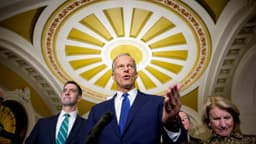
Senate Voter ID Amendment Fails as Republicans' Sweeping
Senate Voter Id Amendment is back in focus after the latest reporting reported that Watch for the next confirmed development. Official response, or measurable impact related to

Did Spencer Pratt Win Today: Nithya Raman Takes the Lead
Did Spencer Pratt Win is back in focus after USA Today reported that Spencer Pratt. Former reality TV star, loses ground in LA mayor's race.

Peru Elections 2026 Results: Statistical Tie Unfolds
According to the Ipsos quick count, the Peru elections 2026 results are currently in a statistical tie. With over 90% of the votes counted, right-wing conservative candidate Keiko
More News
Politics
Susan Collins Faces Tough Debate as Maine Senate Race
Business
Why Did I Receive a $90 Social Security Check? The
Travel
Jennifer Lundy Universal Orlando lawsuit: Mom claims
Stock Market
ISS Russia Drill Tension Escalates as NASA Astronauts Take
Tech
PS5 Pro Tech Arrives on Standard PS5: What It Means for
Sports